

Trail Notes
Bogus Georgia raid / Smelly oil deal / Trump's shocking state / Nursing home payoff / Twin crypto cronies / More Trump revenge / Latest ballroom rant / Vaccine vacuum

Tulsi Gabbard’s bogus Georgia raid
When Donald Trump claimed once again during his speech at the World Economic Forum annual meeting in Davos, Switzerland, last week that the 2020 election was “rigged” and “people will be prosecuted for what they did,” we should have figured that his personal legal team, aka the Justice Department, was about to spring into action. Sure enough, FBI agents showed up at the Fulton County Elections Hub and Operations Center in Georgia Wednesday and left with all of the 2020 election ballots, voting machine tape, images produced during the ballot count, and voter rolls.
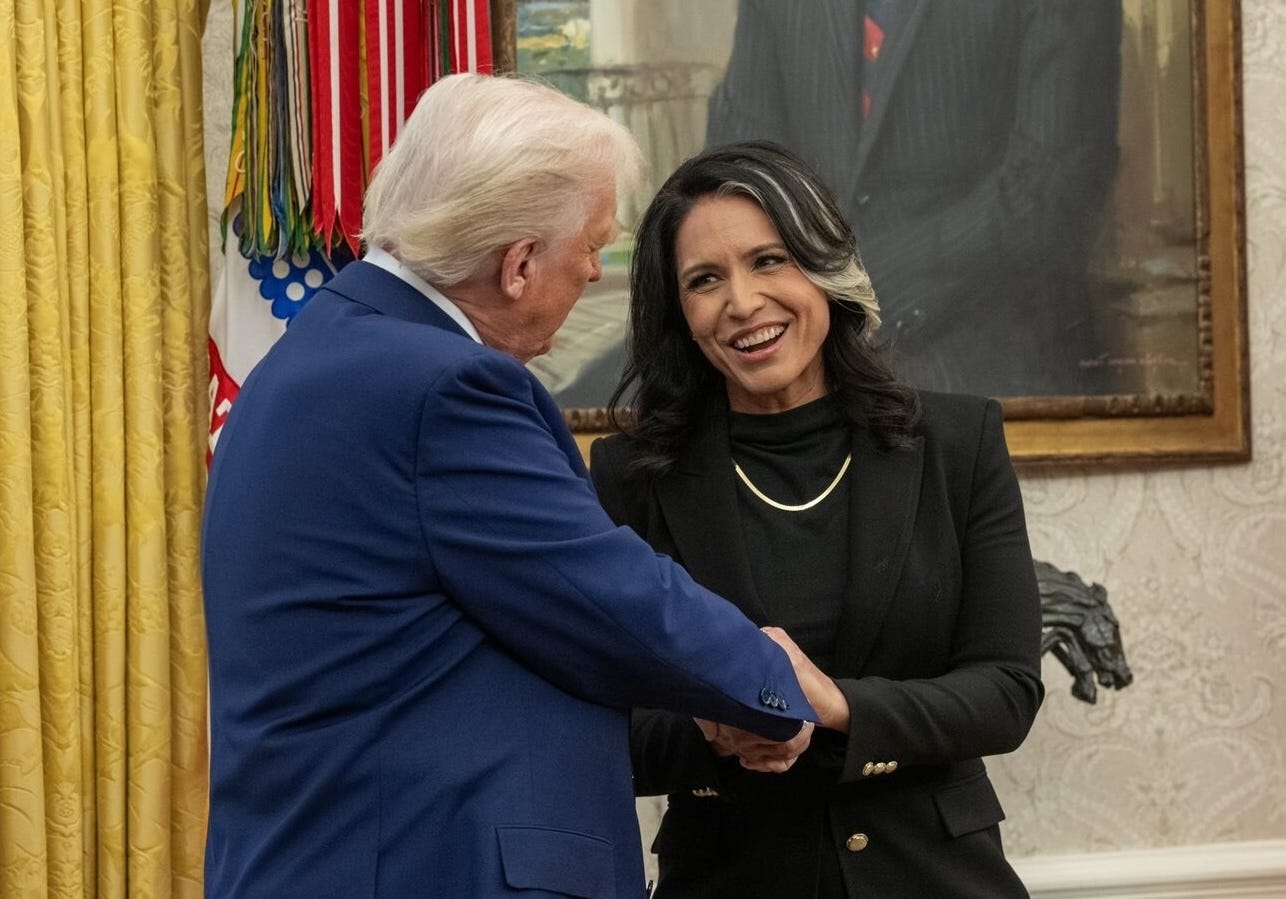
Observing the FBI agents in action was Tulsi Gabbard, director of national intelligence, which seemed odd considering that she has no law enforcement powers and her job is to focus on foreign threats. Mark Warner of Virginia, vice chair of the Senate Intelligence Committee, wondered about that, too, and suggested that Gabbard was on hand to give credence to what he portrayed in a post on X as a “domestic political stunt designed to legitimize conspiracy theories.” Another Democrat, Georgia Sen. Jon Ossoff, issued a statement describing the raid as “a continuation of this sore loser’s crusade, despite repeated audits and independent reviews confirming that Donald Trump was indeed defeated.”
Georgia, of course, is the same place where Trump asked Secretary of State Brad Raffensperger, a Republican, to “find” 11,780 votes so he would win the state. It’s also where the votes were counted three times to ensure the results were accurate. But Trump still refuses to accept the outcome. Curiously, Paul Brown, the special agent in charge of the FBI’s Atlanta field office, was suddenly bounced from his job last week, although it’s still not known if it was related to Wednesday’s raid.
Smelly oil deal
It turns out that both of the companies the Trump administration granted confidential licenses to sell Venezuelan oil have previously been prosecuted for bribery schemes involving oil sales elsewhere, according to The Washington Post. That revelation is sure to intensify concerns about the limited oversight of the arrangement the administration made with Vitol and Trafigura not long after the U.S. military attacked Venezuela and abducted its president, Nicolás Maduro.
The licenses were granted a year after Donald Trump signed an executive order eviscerating the Justice Department unit that investigates U.S. companies that bribe foreign governments. It was that unit that brought charges in 2020 against Vitol, which agreed to pay a penalty of $135 million, and in 2024 against Trafigura, which paid $126 million in fines. And, as fate would have it, a senior trader at Vitol donated $6 million to political committees supporting Trump’s 2024 presidential campaign. It’s probably just a coincidence.
Trump’s shocking state of mind
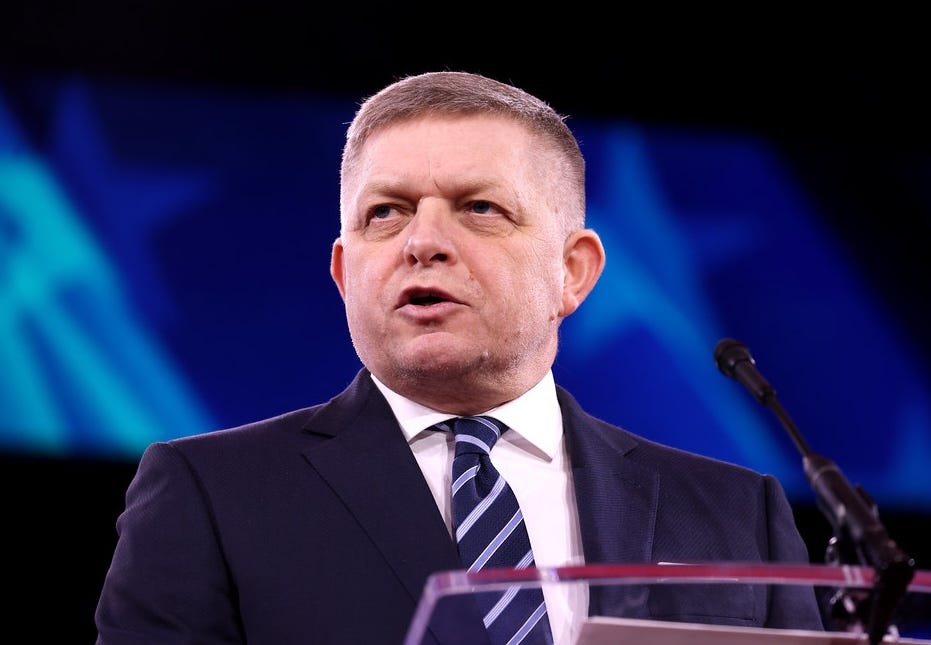
Slovakian Prime Minister Robert Fico is one of Donald Trump’s few European leader buddies, but perhaps not for much longer. Last week, according to Politico, Fico told a group of other diplomats that he was shocked by Trump’s “psychological state” when he met with him at Mar-a-Lago earlier this month. He went on to say that the president seemed “dangerous,” according to at least five diplomats cited by Politico.
Fico, not surprisingly, went into a frantic backpedal and said he “emphatically rejected” what he described as lies. White House spokesperson Anna Kelly, meanwhile, dismissed the report: “This is absolutely total fake news,” she said, “from anonymous European diplomats who are trying to be relevant.”
Nursing home payoff
It didn’t get a lot of attention when it happened last month, but a White House decision to revoke a Biden-era regulation made a lot of nursing home executives happy. The rule required the facilities to increase staffing levels to reduce the likelihood of residents being neglected, particularly in rural communities.
Beginning last August, the nursing home industry began making political donations that would eventually total $4.8 million to MAGA Inc., Trump’s super PAC. Later that month, a group of the executives who made the biggest donations attended a private lunch with the president at his golf club outside Washington. They made their case that the rule, which had been put on hold, would drive up their costs and cause them to close nursing homes.
In December, their campaign paid off. The Department of Health and Human Services deep-sixed the regulation, even though, according to one estimate, the staffing rule could have saved as many as 13,000 nursing home residents’ lives per year.
Twin crypto cronies
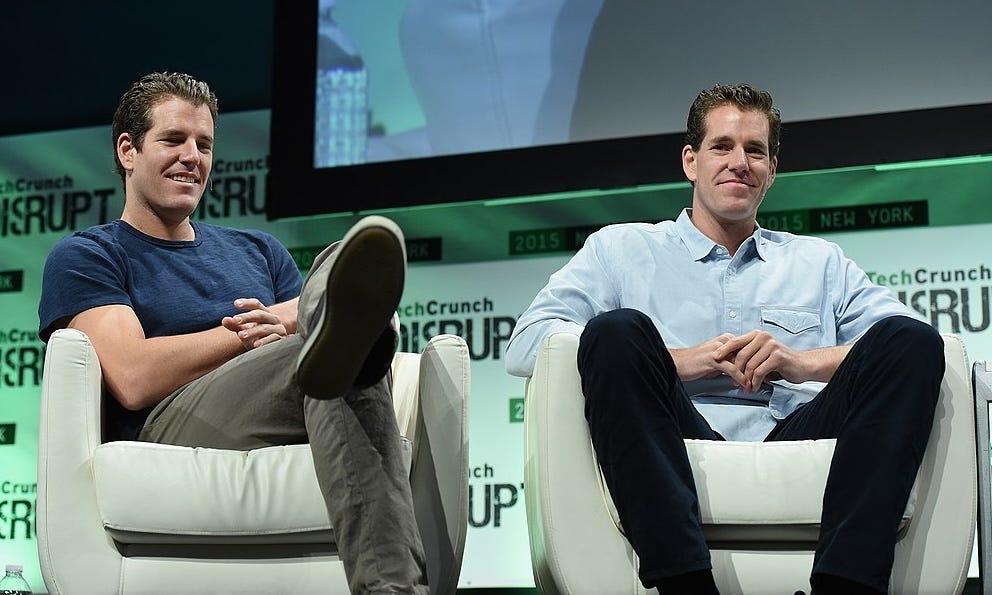
Federal regulators just dropped a lawsuit against a cryptocurrency company run by billionaire twins Tyler and Cameron Winklevoss. The pair has close ties to Donald Trump and his family, having not only donated to his reelection campaign, but also to the president’s pet project, the White House ballroom. They also are founding members of an exclusive club in Washington partly owned by Donald Trump Jr. and have invested in a crypto firm cofounded by Eric Trump. Their case dates back to 2022, when customers of the twins’ firm, Gemini Trust, could not access their money for 18 months. Now that investors have recovered their assets, the Security Exchange Commission decided the matter has been resolved.
More Trump revenge
In another slap of retribution, the Treasury Department canceled 31 contracts totaling $4.8 million with the consulting firm Booz Allen Hamilton. Treasury Secretary Scott Bessent said the move was part of the administration’s effort to reduce fraud and waste. But he also singled out Charles Edward Littlejohn, a former Booz Allen employee who, when a contractor at the Internal Revenue Service, leaked to The New York Times and ProPublica the tax returns of thousands of rich Americans, including Donald J. Trump.
Latest ballroom rant
Last weekend Donald Trump posted a long rant on Truth Social dismissing any legal efforts to change the plans for his massive $400 million ballroom. “Key materials” have already been selected, he insisted, and “IT IS TOO LATE” to make alterations.
Trump made that claim, however, just a few days after Justice Department lawyers were in court suggesting that the plans may be flexible. That admission came during arguments on a lawsuit brought by the National Trust for Historic Preservation, a nonprofit charged by Congress to preserve historic buildings, contending that Trump ignored legally required reviews and didn’t bother to get congressional approval. For his part, Trump railed that “stoppage of construction, at this late date, when so much has already been ordered and done, would be devastating to the White House, our Country, and all concerned.”
Vaccine vacuum
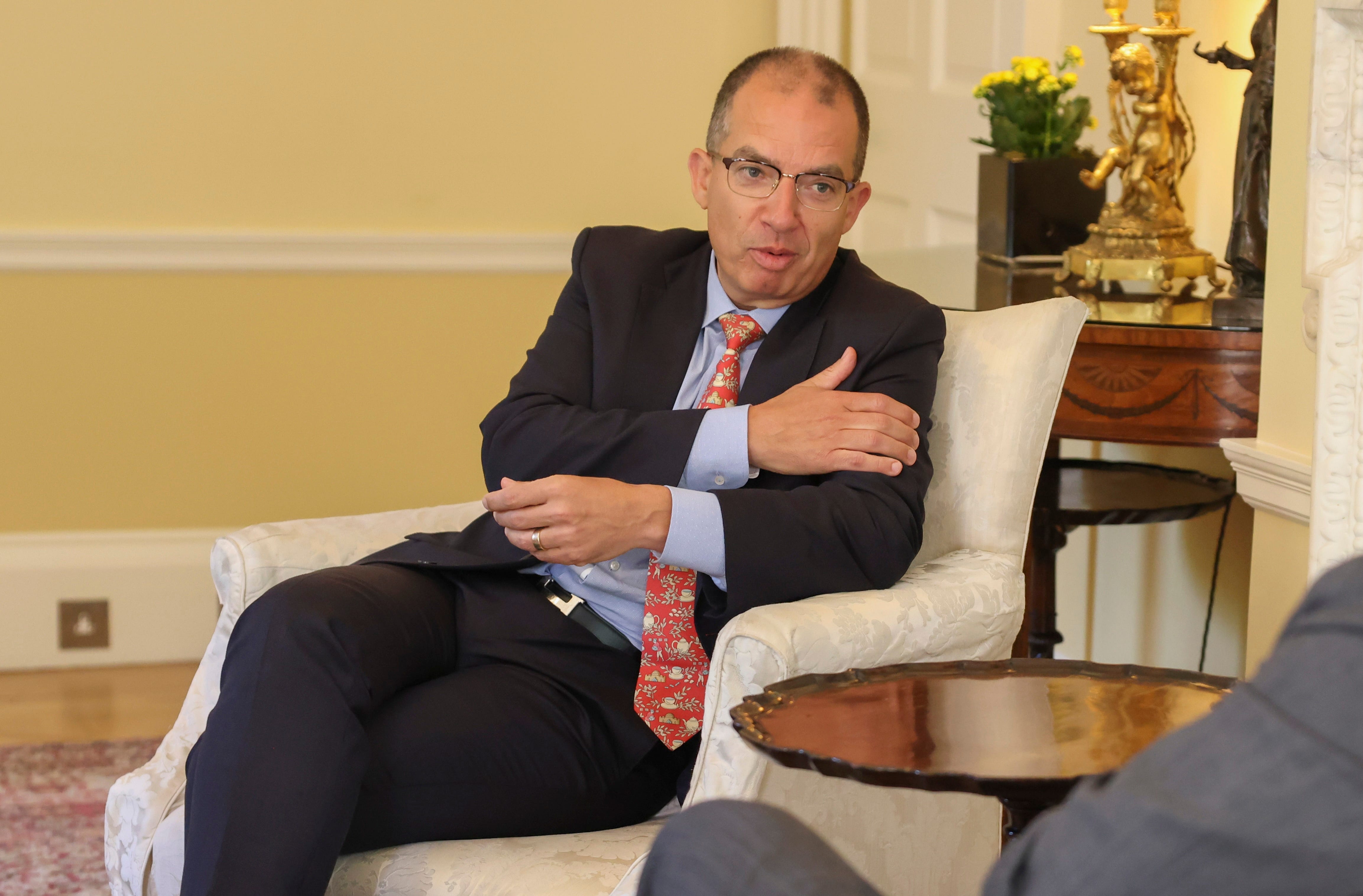
Last August, Health and Human Services Secretary Robert Kennedy Jr. had his agency cancel nearly $500 million in grants for mRNA-based vaccine research, which has been widely credited for the rapid development of COVID vaccines during the pandemic. Now Moderna, a key COVID vaccine producer, is saying it’s not going to invest in new vaccine trials because of increasing opposition to immunization from Kennedy and his agency. “You cannot make a return on investment,” noted Moderna CEO Stéphane Bancel, “if you don’t have access to the U.S. market.”
Slipping consumer confidence
U.S. consumer confidence dropped this month to its lowest level since 2014, even lower than during the pandemic. Economists linked it to stubbornly high prices and mounting anxiety about a sluggish labor market.
Who needs guardrails?
In an unguarded moment, Donald Trump opened up during an interview on Tuesday with Fox News’ Will Cain. When asked about guardrails, Trump responded, “I don’t need guardrails. I don’t want guardrails. Guardrails would hurt us.”
Randy Rieland is a former columnist at Smithsonian magazine, website director at the Discovery Channel, and senior writer at Washingtonian magazine.
Money Trail is a fiscally sponsored project of the Alternative Newsweekly Foundation, a 501(c)(3) public charity, EIN 30-0100369. Donations are tax-deductible to the extent allowed by law.