

Trail Notes
Midterm madness / Commies on the loose / Election spin cycle / Lawsuit landmine / AI money pot / Keyword funding / White-collar whitewash / Weaponizing Medicaid

Midterm madness
Donald Trump went down to Georgia Wednesday and hit the midterm trifecta:
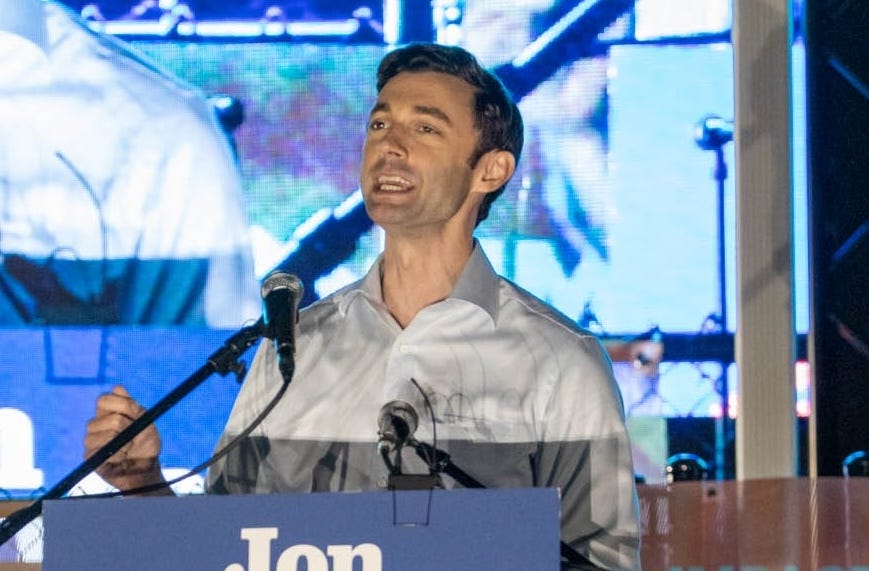
He played the “He’s no manly man” card, a favorite snipe against Democrat James Talarico in Texas, only this time the target was Georgia Sen. Jon Ossoff. He said Ossoff reminded him of “Pinky Herman.” He likely meant Pee-wee Herman, but don’t be dumb (with a “b”) and get hung up on details.
He raised the sinister transgender threat. “We had transgender for everybody. Men in women’s sports came ravaging through our cities.”
And finally—drum roll—he brought up the Commie menace: “The radical left is actively trying to destroy our children’s future with the disaster known as Communism. This isn’t Social Democrats, these are Communists. The Communists want to take Mount Rushmore down. They want to blow it up and take it down.”
Just when you’re about to call 988 for a crisis intervention team, you remember that he’s the president of the United States.
Commies on the loose
Of course, other Republicans have joined Trump in reviving the Cold War. Take House Majority Leader Steve Scalise of Louisiana. He proclaimed, “Communism is on the ballot this November!” But he didn’t stop there. “The Bolshevik takeover of the Democratic Party is in full swing,” he declared. Wow. Bolsheviks? Apparently, it’s Vladimir Lenin time.
But there’s more. This from Dark Lord Stephen Miller: “The contrast has never been more clear,” he said. “There is President Trump, the Republican Party and America first, or the crazy Communist lunatics who will steal everything you know and love in this nation and they will never, ever, let you have it back.”
And more. During an interview with Missouri Sen. Eric Schmitt, MAGA podcaster Benny Johnson suggested that “the left is setting themselves up, they’re training, they’re ready to try and stage a mass slaughter event.” To which the senator responded, “Yeah. They’re drawing federal officers out and then they have snipers or other people who are going to actually murder ICE agents.”
(For even more, see Elliott Negin’s July 9 essay, “The Commies are Coming! The Commies are Coming!”)
Election spin cycle
In the Trump era, just about every day is Opposite Day, so what the president said about the vulnerability of the country’s election system should come as no surprise. He would have us believe that our election security is on a razor’s edge, imperiled by the twin threats of foreign interference and noncitizen voting, despite the fact that the intelligence documents Trump cited last week concluded that America’s election system “would be difficult to manipulate on a wide enough scale to alter the election outcome.” Moreover, many studies of U.S. elections, including a major one conducted by the conservative Heritage Foundation, have found the level of noncitizen voting to be minuscule.
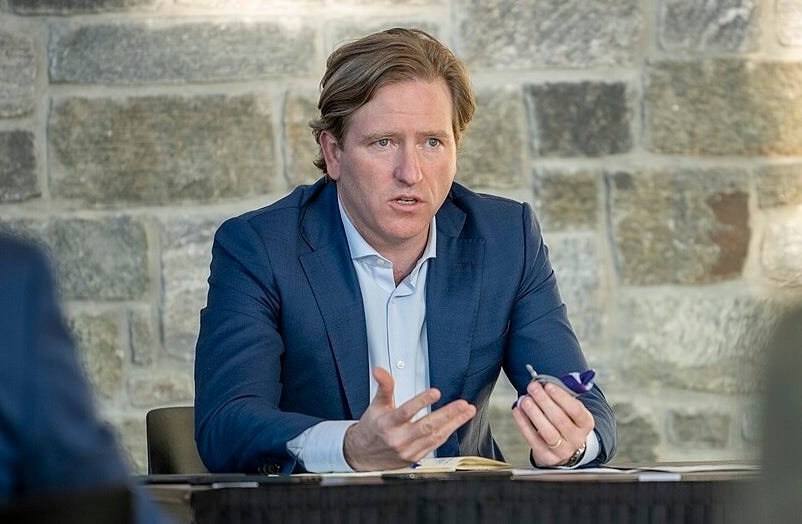
Then you have what the Trump administration has done to undermine election security. The Cybersecurity and Infrastructure Security Agency, whose role includes sharing with states cybersecurity best practices and intelligence about foreign government influences, has lost a third of its staff in the past year. And the president fired its former director, Christopher Krebs, after he publicly concluded that the 2020 election was “the most secure in American history.”
As The New York Times has reported, other federal agencies also have also downsized their election security work, including the FBI and the Office of the Director of National Intelligence, which under Tulsi Gabbard gutted the Foreign Malign Influence Center that monitors foreign election threats. And, earlier this month, the White House forced out the three remaining members of the Election Assistance Commission, an independent, bipartisan commission that supports states in overseeing elections.
Lawsuit landmine
Donald Trump’s $10 billion defamation lawsuit against the BBC has taken a turn he’s not going to like. A federal judge ruled Tuesday that he must turn over detailed financial information because he contends that the network edited a documentary in a way that damaged him not only personally, but also the reputation of his businesses.
“All of President Trump’s brand, properties and businesses are impugned or said to have been impugned. Reputational, economic damages, all of that is now at issue in this case,” said Judge Enjoliqué Lett. That means that the BBC, which is also pushing to depose Trump and members of his family and staff, could be granted access to loads of Trump’s business records, although he is likely to appeal Lett’s decision.
The documentary, which implied that the president called for violence at the U.S. Capitol on January 6, 2021, never actually aired in the United States.
AI money pot
When it comes to its emerging strategy on artificial intelligence, the Trump administration favors providing funding to individual researchers rather than to universities, potentially another blow to universities that rely heavily on research grants. In a report released Tuesday, the White House Office of Science and Technology Policy made it clear that it intends to steer much of the federal government’s $200 billion research and development budget to individuals through fellowships and awards. Critics say that could result in more money going to research aligned with administration priorities now that political appointees are being given more power over who gets grants.
Keyword funding
Meanwhile, federal agencies have admitted that they canceled nearly $2 billion in research grants to the University of California based on keyword searches for terms such as “diversity,” “gender,” “vaccine hesitancy” and “COVID-19.” The intent, they conceded, was to screen out projects that might not mesh with the administration’s priorities. Researchers at the university have sued to get their grant money back.
White-collar whitewash
Not only has the president established quite a track record for pardoning white-collar fraudsters and embezzlers, but his administration also is building a reputation for making corporate crime a low priority. According to The Wall Street Journal, the Justice Department “has moved sharply away from charging companies,” pointing out that it has declined to charge employees at Alibaba, EagleBank and Abbott Laboratories, even though prosecutors believed it should take them to court.
Evan Barr, a former Justice Department prosecutor, said corporate investigations “have pretty much been dialed way back,” adding “so, if you’re in the world of financial services or a large public company, you can breathe a lot easier.”
Weaponizing Medicaid
For the second time, the Trump administration is withholding a large amount of Medicaid funding from two of the White House’s least favorite states, California and Minnesota. This time it’s holding back $867 million from California and $200 million from Minnesota. It was already withholding $1.3 billion from California and $250 million from Minnesota.
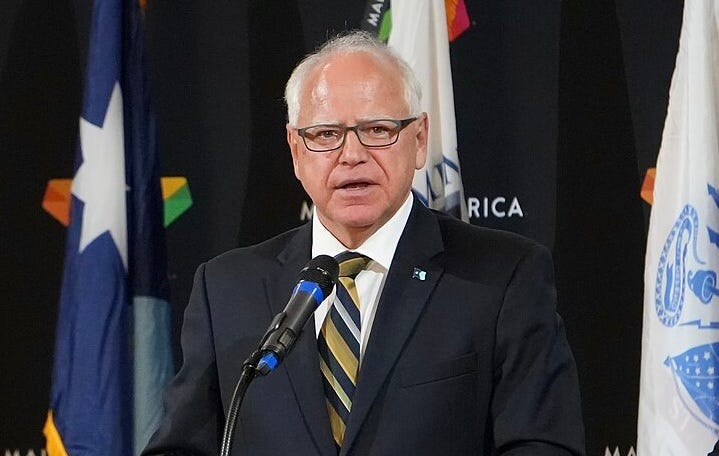
The administration claims there has been particularly high levels of Medicaid fraud in the two states, including claims made for deceased people. The governors of both states, Gavin Newsom and Tim Walz—both frequent Trump targets—contend the cuts are more political than they are based on fraud.
Thin ICE
To date, the Trump administration has charged more than 550 people with assaulting ICE or Border Patrol agents, according to a New York Times analysis. But of the roughly 400 cases that have been resolved so far, nearly half have not resulted in convictions. Either juries acquitted defendants, judges threw out charges, or prosecutors dropped them. Normally when the Justice Department moves forward with a criminal case, 90 percent of the time it gets a conviction or a guilty plea.
Minority report
For 60 years, the federal government has required tens of thousands of private sector employers to submit workforce demographic reports each year to the Equal Employment Opportunity Commission (EEOC). But that requirement, which among other things provided data on the number of women and minorities in C-suites as well as the makeup of employees in the lowest-paying jobs, may soon be a relic of the past. On Tuesday, the EEOC board approved a proposal to drop it, a change that will likely become official after a 30-day public commentary period.
This new direction aligns with positions taken by EEOC Chair Andrea Lucas, an outspoken critic of diversity, equity and inclusion (DEI) programs who has made a point of encouraging white men to file lawsuits if they believe they’ve been discriminated against. Before the vote, Lucas argued that making companies file demographic reports can encourage them to discriminate to diversify their workplaces.
Arch enemies
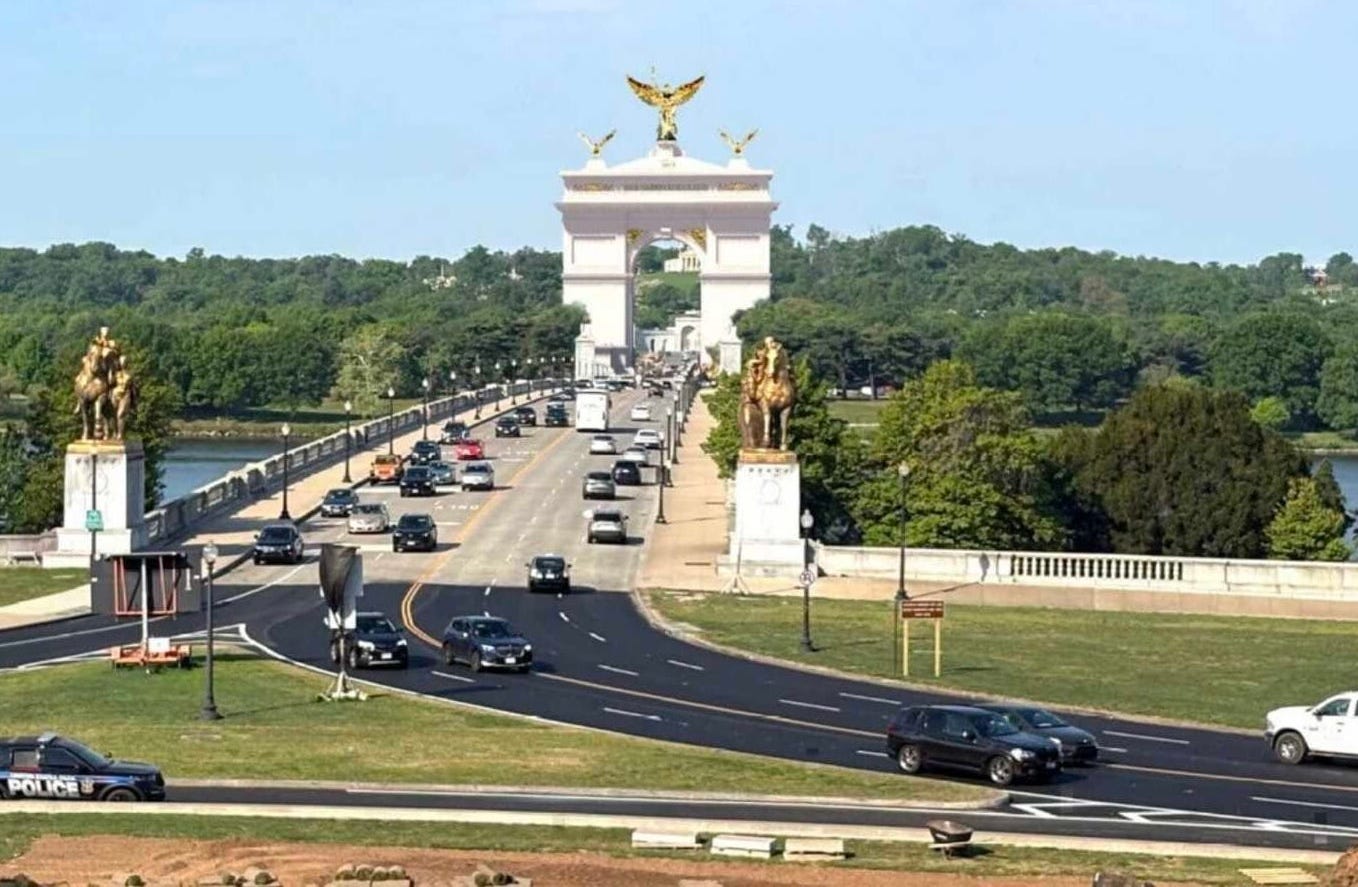
Another party is asking questions about the arch Donald Trump wants to erect near the entrance to Arlington National Cemetery. Although the proposed 250-foot-high structure would technically be on federal land, officials of neighboring Arlington County say not nearly enough scrutiny is being given to safety, infrastructure and traffic congestion issues. The county’s planning director, Anthony Fusarelli, argued that the sidewalks on the Memorial Bridge leading to the arch are too narrow to handle a lot of tourist traffic and that visitors would have to cross multiple lanes of traffic, creating more congestion on an already busy traffic circle and on nearby roads and highways.
At the same time, the county’s historic preservation planner, Mical Durak, contends that the “scale and mass of the arch is inappropriate in the context of its historic setting.” She noted that it would dramatically disrupt the deliberate visual connection that was created between the Lincoln Memorial and Arlington House, the onetime plantation house atop Arlington National Cemetery that was built by Martha Washington’s grandson, George Washington Parke Custis, and inhabited for 30 years by Robert E. Lee and his family, That visual link, designed to symbolize the reconciliation of North and South after the Civil War, would be lost.
Randy Rieland, Money Trail’s “Trail Notes” columnist, is a former columnist at Smithsonian magazine, website director at the Discovery Channel, and senior writer at Washingtonian magazine.
Money Trail is a fiscally sponsored project of the Alternative Newsweekly Foundation, a 501(c)(3) public charity, EIN 30-0100369. Donations are tax-deductible to the extent allowed by law.
Thanks, Randy! So, the week began with warnings that America's monuments were under attack. It ended with plans for a monument so large that the neighbors are worried about—you guessed it—traffic! In between lies a peculiarly Washington story: a new monument is under discussion while one of the city's best-known memorial landscapes still struggles with leaks and algae. Grandeur has never been the problem. Plumbing sometimes is.