

Red State Farmers Embrace Wind While Trump Tries to Kill It
The Trump administration’s attack on renewables could backfire in the next election

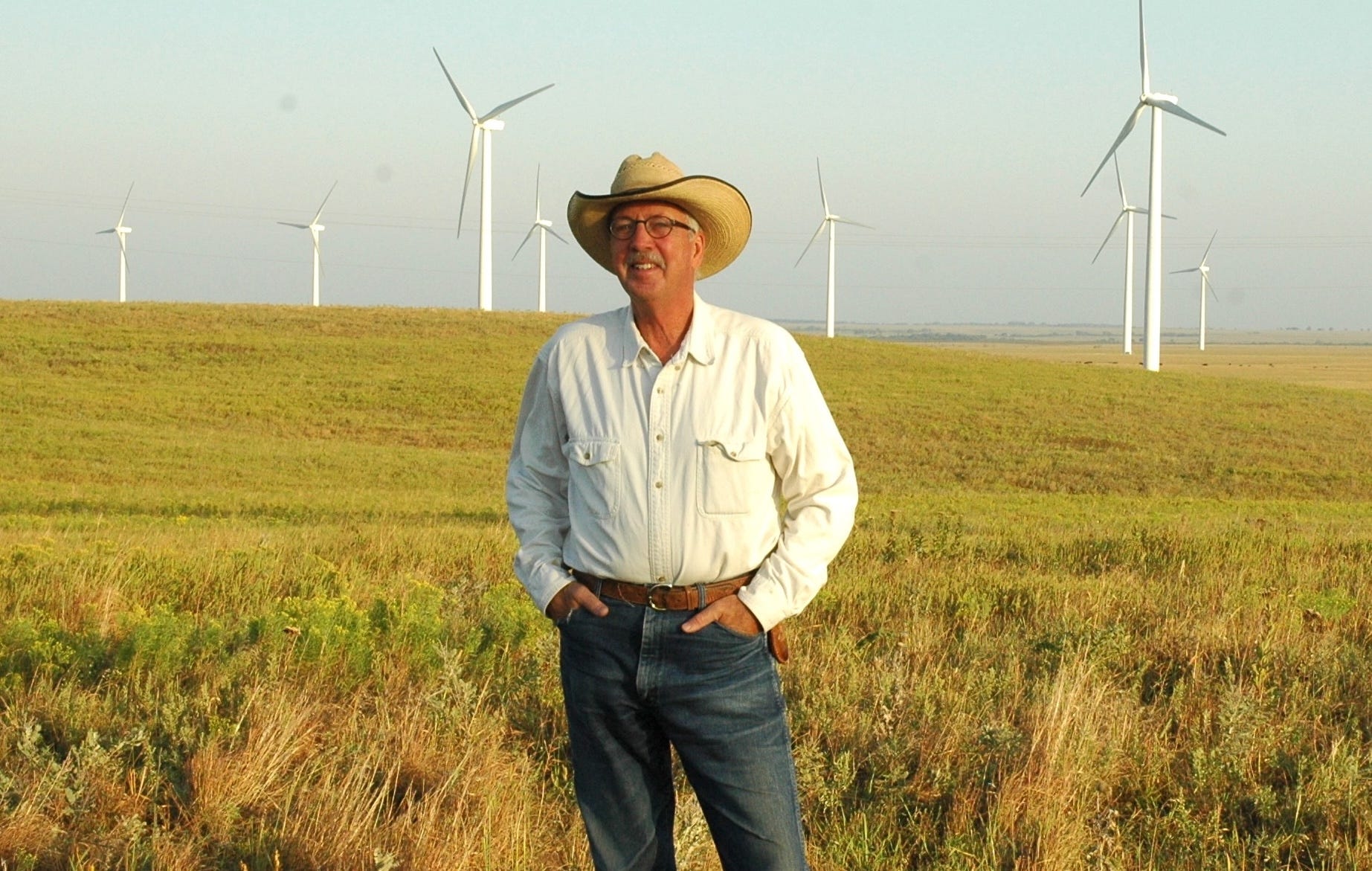
Pete Ferrell is a fourth-generation cattle rancher in the windy Flint Hills of Kansas. His great grandfather built the house he lives in, and in the early days it was powered by an old-fashioned wind generator.
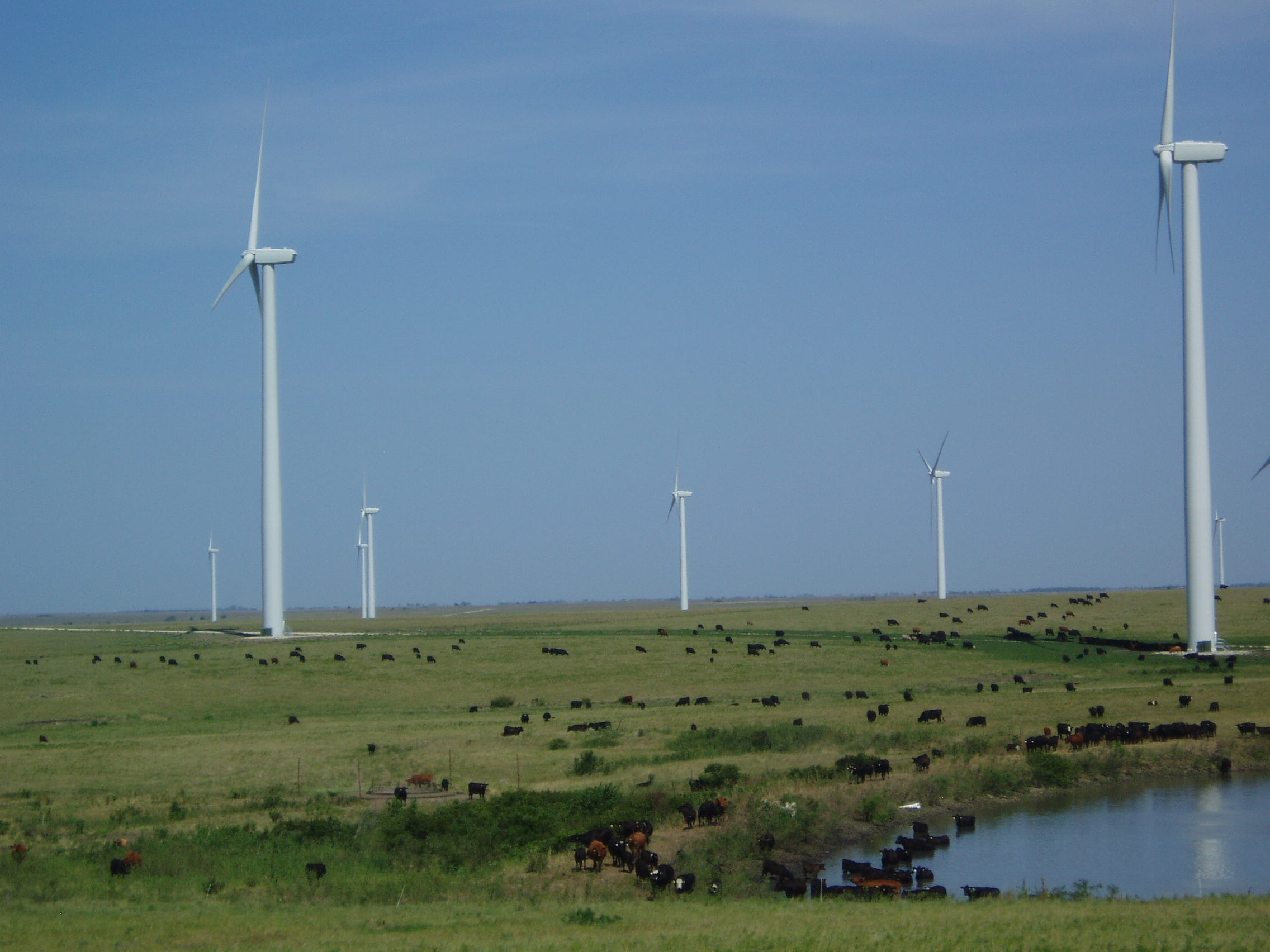
But wind technology has improved dramatically since then, and in the 1990s Ferrell began exploring the possibility of putting wind power to work on his ranch. In 2005 he contracted with a major wind developer, Avangrid, to site 50 new turbines on his ranch as part of a larger development on nearby ranches. The project generated enough electricity to power more than 60,000 homes, providing Ferrell and his neighbors with extra income to see them through hard times.
“Wind is my cash crop,” he says. “The wind always blows, even in times of drought.”
After that project’s success, Ferrell says his phone rang off the hook. Other farmers and ranchers wanted to get in on the action. But many of them did not have the wherewithal or technical knowledge to go about setting up turbines on their land. Besides, he says, there was pushback from fossil fuel industry-funded front groups like the American Legislative Exchange Council, which spreads disinformation about renewables and drafts sample bills for state legislators to block clean energy initiatives. If that weren’t enough, Ferrell says some of his neighbors object to turbines because they think they’re an eyesore.
But when renewable energy programs began to crop up during the Obama and Biden administrations, more farmers and ranchers began reaching out for information. Some utilities embraced wind and solar as their cost declined and they helped lower electricity prices. Local communities also realized they would benefit from a growing tax base. “The chokepoint was that farmers and ranchers didn’t have the technical support they needed,” Ferrell says. “They do now.”
Ferrell sits on the board of a nonprofit organization launched this year, Renewable Energy Farmers of America (REFA), which provides technical support for farmers and ranchers who want to put turbines or solar panels on their property. Despite the Trump “drill, baby, drill” mantra, REFA Executive Director Jeff Risley is bullish about the group’s future.
“Wind has become very important,” Risley said in an email. “As of April 2024, the U.S. had about 150 gigawatts (GW) of operating onshore wind farms [enough to power more than 130 million homes], almost all on private land. That means farmers and ranchers are earning lease payments on these projects while still farming and ranching around turbines…. These projects are helping keep rural America strong.”
The Trump administration’s opposition to wind energy has short-circuited some major projects, but federal oversight mainly applies to projects sited offshore or on public land, which is estimated to host just 1 percent of total land-based wind development. Even so, Risley says federal opposition still can hinder landowners who want to apply for wind or solar project permits on their land.
“The administration’s policies can slow or even kill onshore wind projects by delaying special permits for some projects from the Department of Interior or the [Federal Aviation Administration],” Risley wrote. “Farmers and ranchers deserve the right to make the best decision for their land, livelihood, and legacy. Policy at any level should not block legitimate projects that a landowner wants to host.”
Budding wind power on the farm
Wind power has expanded dramatically over the last two decades. Capacity increased from 11 GW in 2006 to 119 GW in 2020, and the 65,000 rural area turbines in 2020 were more than a six-fold increase from 2006, according to the U.S. Department of Agriculture (USDA). Currently, there are more than 76,000 turbines in 45 states, Guam and Puerto Rico, according to the U.S. Geological Survey.
Wind turbines are mainly located in Great Plains, Midwestern and Western states. The top four are red states: Texas, Oklahoma, Iowa and Kansas, in that order. Texas is responsible for nearly a third of total U.S. wind energy production.
Between 2012 and 2020, 56 percent of rural area turbines were sited on cropland and 40 percent were placed on pasture land, according to USDA estimates, and most of that land has remained in agriculture. The additional income from wind turbines enables farmers and ranchers to hold onto land their families have owned for decades. Indiana farmer Michael Dora put it this way in a video produced by Farm to Power, a nonprofit group that helps farmers and ranchers install renewable energy on their land: “For myself and our family farm turbines made a lot more sense,” Dora explained. “It allowed us to create energy for the nation and it allowed us to continue to farm the land that we love in a way that multiple generations have.”
Trump puts red state Republicans in a bind
It’s no secret that President Trump opposes wind. He ranted “I hate wind” when soliciting fossil fuel company executives for campaign contributions last year. He has even falsely claimed that turbine noise causes cancer. To make good on his threats, the Trump administration cancelled $679 million in federal funding for offshore wind projects in late August.
Trump appointees share his antipathy toward renewables. Energy Secretary Chris Wright, former CEO of North America’s second largest fracking company, argues that federal spending on renewable energy is “nonsensical” and that wind and solar are “mature” industries that no longer need subsidies. Unsaid is the fact that the oil and gas industry has enjoyed massive subsidies for more than 100 years. As reported by Money Trail last week, it now receives more than $34 billion in tax breaks and subsidies annually.
The administration’s assault on clean energy has had noticeable impacts at the state level. Matt Russell, who operates a family farm in Iowa and is interim executive director of the Iowa Farmers Union, said he’s noticed growing opposition by organized anti-wind forces since Trump took office.
“Farmers want to make money from renewable energy, but it’s very complicated when there is resourced opposition by the fossil fuel industry,” Russell told Money Trail. It’s particularly difficult when farmers are suffering ever more economic hardship due to climate change-related extreme weather events, he added.
Republican politicians in wind states are walking a fine line, trying to placate Trump and at the same time support their constituents who like wind. For example, Iowa Rep. Mariannette Miller-Meeks represents a state that gets nearly 60 percent of its electricity from wind, the largest wind power share of any state, and ratepayers there have relatively low electric bills. She is on the record saying “wind works,” but she voted for Trump’s One Big Beautiful Bill Act, which eliminated billions of dollars of federal wind subsidies. She’s now in danger of losing her seat.
“Iowa Republicans are coddling the wind hater-in-chief at the expense of their own state,” Iowa Gazette columnist Todd Dorman charged in a recent opinion piece. “It’s almost as if their principles are determined by which way Trump’s hair blows.”
A Washington, D.C.-based energy lobbyist, who spoke on background, agreed. “The incentives for wind energy were helping a lot of members [of Congress] in red states, but they don’t want to speak out because Trump is against it,” he told Money Trail. “Everything is upside down these days.”
Despite wind’s success in red states, the U.S. wind industry’s prospects are dim, at least for the short term, particularly for offshore wind as well as homegrown turbine manufacturing. The business group E2 pointed out in its latest report that the Trump administration’s war on renewables on behalf of the fossil fuel industry has resulted in the cancellation of $22 billion worth of clean energy projects across the country in the first half of 2025, leading to the loss of 16,500 jobs. It remains to be seen what the impact of these job losses—many in red states—will have on the Republican Party’s prospects in the 2026 mid-term elections.
But ranchers like Pete Ferrell are not so worried about the ebb and flow of electoral politics, because he says he made the right decision to embrace wind. After all, he’s seen good times come and go over the decades with weather conditions in a climate that is rapidly worsening. He says wind energy just makes sense.
“It’s really a practical issue. There’s a river of air floating above us and we monetized it. I just hope the economics prevails over the politics.”
Rocky Kistner, Money Trail’s associate editor, previously worked as a reporter and producer at ABC News, the Center for Investigative Reporting, HuffPost, Marketplace and PBS Frontline.
Money Trail is a fiscally sponsored project of the Alternative Newsweekly Foundation, a 501(c)(3) public charity, EIN 30-0100369. Donations are tax-deductible to the extent allowed by law.
Excellent piece. Needs to be widely distributed!