

All the President’s Pardons
Trump rewards criminals at the expense of their victims—and U.S. taxpayers

Just 12 hours after Todd Chrisley was released from prison last May following a pardon from Donald Trump, the reality-TV-star-turned-convicted-fraudster appeared in a video posted on his daughter Savannah’s Instagram account.
Accompanied by Savannah, Chrisley is shown in the video scurrying out of a Nordstrom department store with a shopping bag over his head to escape photographers. After the two get into a waiting vehicle, Todd removes the bag, leans his face toward the camera and exults, “I’m back. The Feds got fucked.” In response, Savannah, narrating the video with a red Trump MAGA baseball cap on her head, erupts in laughter.
Todd Chrisley was only partly right in his assessment of who got fucked. He left out the individuals and financial institutions he conned. Because of Trump’s action, Chrisley and his wife Julie, who were convicted in 2022 of bank fraud and tax evasion and sentenced to 12 and 7 years in prison respectively, wriggled out of paying much of the $22 million they were supposed to return to their victims.
The Chrisleys were just two of some 1,700 people Trump freed with a pardon or commutation in the first year of his second term, a more than sevenfold increase from the number he granted during the entire four years of his first term.
Trump’s pardons of convicted fraudsters like the Chrisleys are consistent with his administration’s broader effort to weaken consumer protections. At the same time Trump is forgiving financial criminals, he is trying to dismantle safeguards designed to prevent such abuses: His administration has hollowed out the Consumer Financial Protection Bureau, rolled back rules requiring payday lenders to assess borrowers’ ability to repay ruinously high-interest loans, and overturned protections that would have allowed defrauded consumers to band together in court rather than pursue private arbitration.
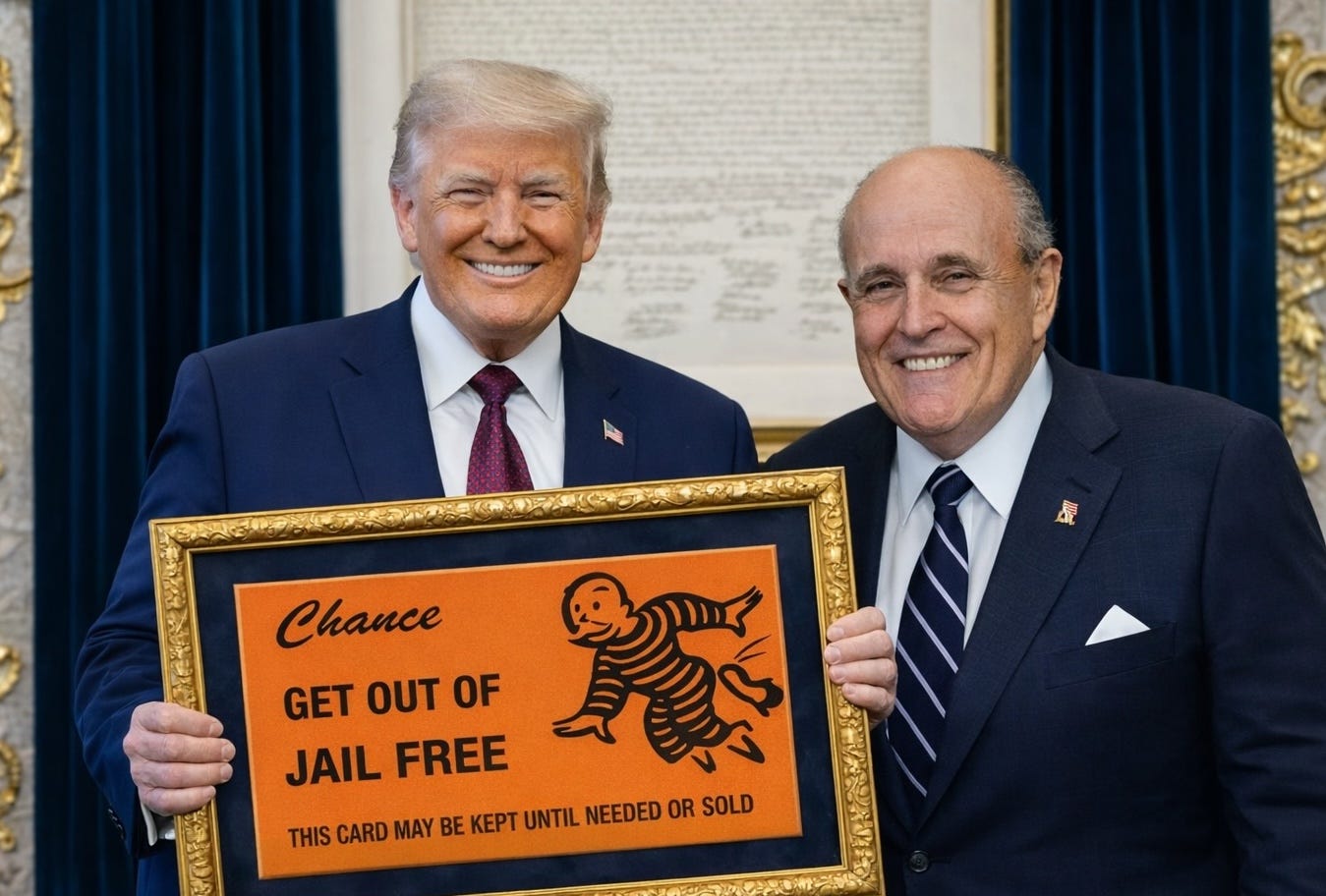
Trump’s message is unmistakable: Crime pays. Anyone with political or financial connections to Trump who commits fraud can expect to receive a “get out of jail free” card while the victims are left holding the (empty) bag.
Trump abuses pardon rights
The Chrisleys found themselves free thanks to the presidential power to grant “Pardons and Reprieves” enshrined in Article II of the U.S. Constitution. Presidential grants of clemency, which extend only to federal crimes, come in several forms. Most common are pardons, which forgive a crime and can wipe away fines and other penalties, and commutations, which reduce penalties, usually by shortening prison terms or eliminating fines, but do not forgive the crime.
Nearly all presidents have granted pardons and commutations, sometimes considerably more than Trump. Jimmy Carter pardoned some 200,000 Vietnam War era draft evaders. More recently, Joe Biden pardoned or commuted the sentences of more than 4,000 people, including about 2,500 nonviolent drug offenders. And like Trump, previous presidents made questionable pardons. Bill Clinton, for example, was roundly condemned for pardoning the “fugitive financier” Marc Rich, who fled the United States after being indicted for fraud, tax evasion and other illegal acts. Biden’s pardon of his son Hunter, which drew a storm of criticism, spared him a potentially long prison sentence for tax fraud and illegal gun possession.
However, presidents before Trump tended to grant clemency to people who had been convicted of relatively low-level crimes, such as drug possession, or who had completed or served many years of their sentences. What also sets Trump apart is the timing of his pardons, the massive financial cost to crime victims and taxpayers, and the obvious benefit to him. Trump has shamelessly offered clemency in exchange for political or financial favors and has pardoned or commuted the sentences of convicts who barely served any time and paid little if any of their penalties.
About 1,500 of Trump’s pardons and commutations last year went to the rioters who attacked the U.S. Capitol on January 6, 2021. When they were freed, they not only served very little time in jail, but they also paid only about 15 percent of the $3 million they collectively owed in restitution, which, in turn, would have covered only a small fraction of estimated cost of the rampage. According to Congress’ Government Accountability Office, the overall cost of January 6 amounted to a whopping $2.7 billion.
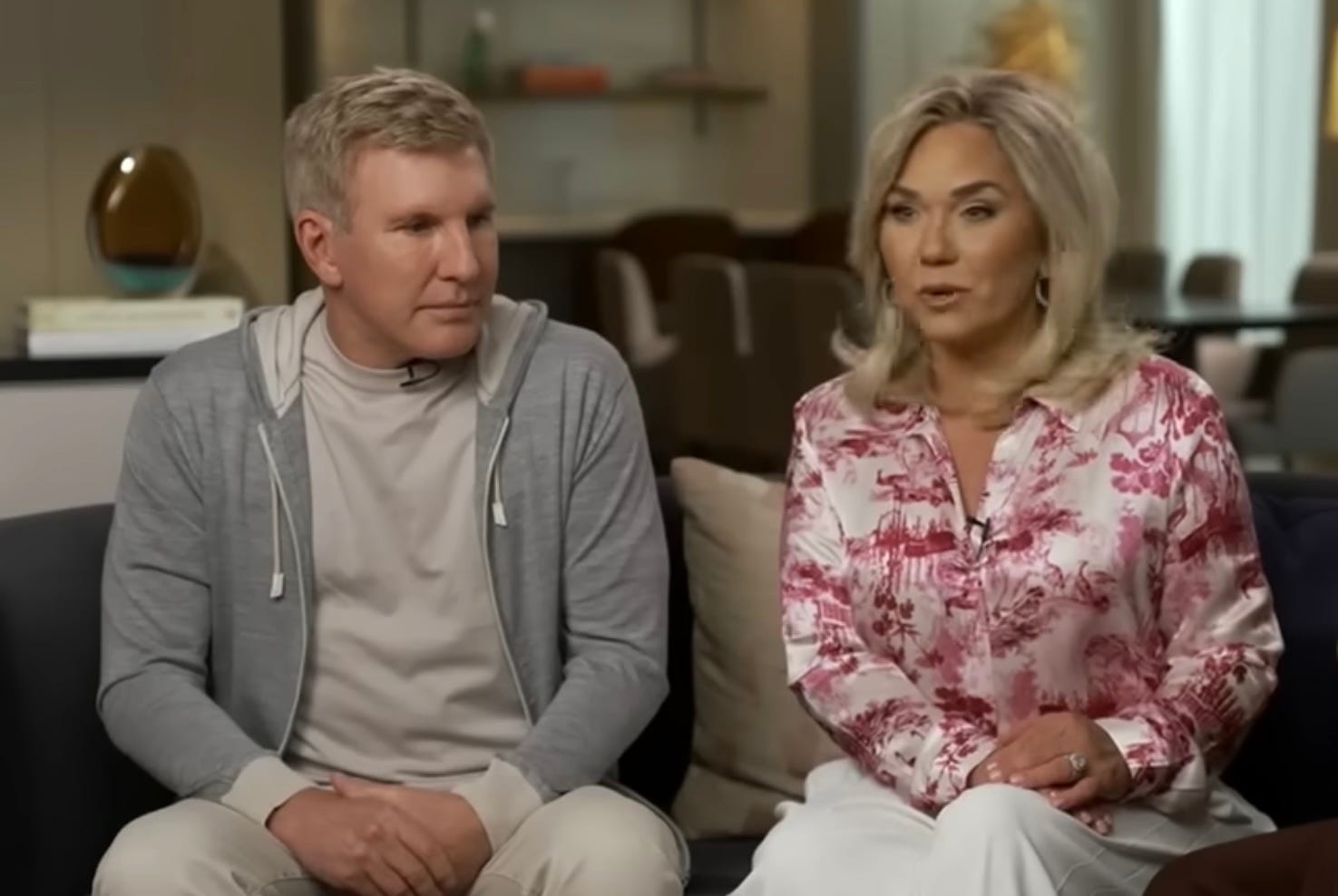
Todd and Julie Chrisley, meanwhile, each served only 28 months of much longer sentences. But the millions of dollars they avoided paying makes them relative small fry in a cesspool of criminals Trump has let off the hook since taking office for a second term.
Among the big fish who received a Trump “get out of jail free” card last year were:
Trevor Milton, pardoned in March, was convicted of securities and wire fraud in 2023 for misleading investors in his hydrogen and electric truck company, which never produced any vehicles. Prosecutors called for Milton to pay more than $660 million in restitution to his victims, but the pardon absolved him of paying anything and kept him out of prison.
HDR Global Trading Limited, also pardoned in March, violated the anti-money laundering and other provisions of the Bank Secrecy Act. As a result of the pardon, HDR Global Trading, which operates the crypto-exchange BitMEX, will skip out on a $100 million fine. Three founders of HDR Global Trading, which is registered in Seychelles, also were pardoned and avoided paying $30 million in fines.
David Gentile, whose sentence Trump commuted in November, was convicted in August 2024 of “a multiyear scheme to defraud” investors out of about $1.6 billion by “misrepresenting the performance of … private equity funds,” according to the U.S. Attorney Office of Eastern District of New York. Gentile and his business partner Jeffry Schneider each received multiyear sentences, but Gentile served only 12 days. Prosecutors recommended that the court require Gentile to forfeit nearly $15.6 million, noting that those “amounts are conservative estimates of the defendants’ ill-gotten gains.”
Gentile and his partner defrauded an estimated 10,000 investors, many of them elderly and living on fixed incomes. In December, nine Democratic U.S. senators sent a letter to Trump demanding answers to why he commuted Gentile’s sentence. “The victims of this fraud—the teachers, veterans, nurses, farmers, elderly retirees, families of disabled children, and nonprofit organizations—will not recover from this decision,” the senators wrote. “They will not regain their lost savings. They will not reclaim their financial security.”
Last June, Democrats on the House Judiciary Committee released an analysis that found that Trump’s second-term grants of clemency through May alone deprived “employees, investors, taxpayers, and other victims” of as much as $1.3 billion in restitution, forfeiture and fines.
“I don’t think that people are fully appreciating the way these pardons are working or whether they are paying attention to the financial interests of crime victims,” Elizabeth Oyer, a former U.S. pardon attorney who was fired shortly after Trump’s second term began, told The Washington Post. “It’s having a detrimental effect on victims and taxpayers, and it’s a windfall to the people who committed crimes.”
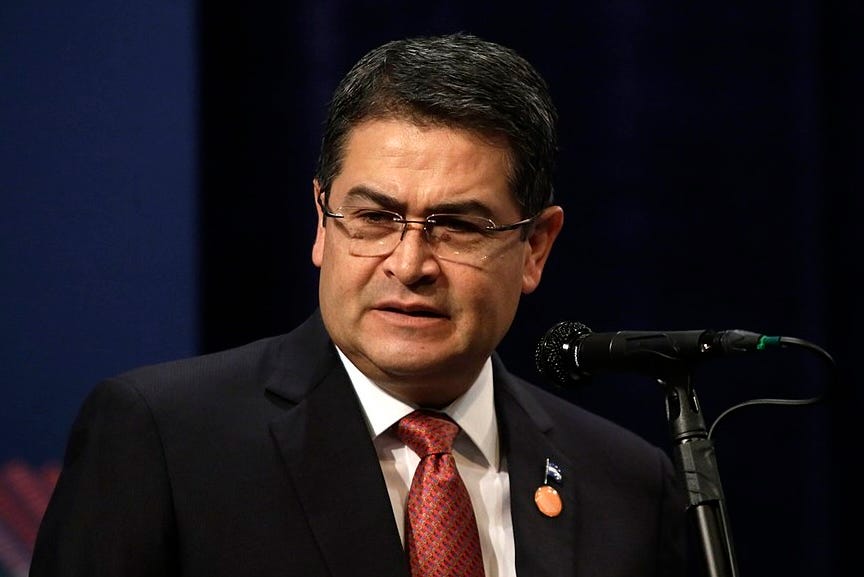
Trump put a bow on his 2025 clemency gifts to mega-criminals in early December by granting a full pardon to former Honduran President Juan Orlando Hernández, who had served only about 18 months of a 45-year prison sentence for drug trafficking and related weapons charges. According to the U.S. attorney for the Southern District of New York who prosecuted the case, Hernández received millions of dollars in bribes to help “facilitate the importation of an almost unfathomable 400 tons of cocaine to this country.” While it is difficult to place a monetary value on the damage caused by Hernández’ criminal enterprise, the cocaine in question was the equivalent of more than 4.5 billion individual doses worth billions of dollars.
Ironically, the crimes for which Hernández was convicted are similar to the charges that Venezuela’s former president Nicolás Maduro faces after the U.S. military abducted him earlier this month.
Quid pro quo on steroids
Known for his transactional approach to just about everything, Trump has freely wielded his pardon pen to reward his supporters and pad his bottom line.
Consider Hunter Biden’s former business associates Devon Archer and Jason Galanis, who were convicted of defrauding the Ogalala Sioux Nation in a $60 million bond scheme. In March, Archer got a full pardon and Galanis received a sentence commutation after they became darlings in right-wing circles for testifying against the Biden family.
Archer had been sentenced to a year and a day in jail but avoided any prison time. He also owed more than $59 million in restitution and forfeiture. Galanis, who served about 8 years in prison before his commutation, owed nearly $162 million in restitution and forfeiture for the bond fraud scheme and a separate securities fraud case. Now it is unlikely that either of them will face financial responsibility for their crimes.
Other Trump loyalists have been spared prosecution altogether. In November, Trump preemptively pardoned 77 supporters who aided his attempt to overturn the 2020 election results, including his close advisers Rudy Giuliani and Sidney Powell, as well as ex-White House Chief of Staff Mark Meadows.
Then there are the instances of the Trumpian “pay to play” pardon mill. Paul Walczak, a former Florida healthcare executive convicted of tax evasion, received a pardon in April just weeks after his mother, a major Republican Party donor, attended a fundraising dinner at Mar-a-Lago that offered direct access to Trump in exchange for $1 million. Trevor Milton, meanwhile, received a pardon after donating about $2 million to Trump-related campaign committees in 2024. Milton maintains his innocence and predictably claimed his contributions had nothing to do with his pardon.
The crypto connection
Trump, whose family has made billions on crypto deals, has shown a particular affinity for pardoning crypto convicts in his second term. As mentioned above, he extended his new-found love for crypto last March by granting a pardon to HDR Global Trading, perhaps the first corporation ever to receive a presidential act of clemency.
The day after taking office last January he also pardoned William Ross Ulbricht, the founder of Silk Road, a dark web site that prosecutors described as a “criminal marketplace … used by thousands of drug dealers and other unlawful vendors to distribute hundreds of kilograms of illegal drugs and other unlawful goods and services.” Silk Road employed a bitcoin payment system that enabled users to conceal their identities and locations. From 2011 to 2013, Silk Road facilitated more than $200 million worth of drug deals, computer hacking services, document forgeries and other illegal activities.
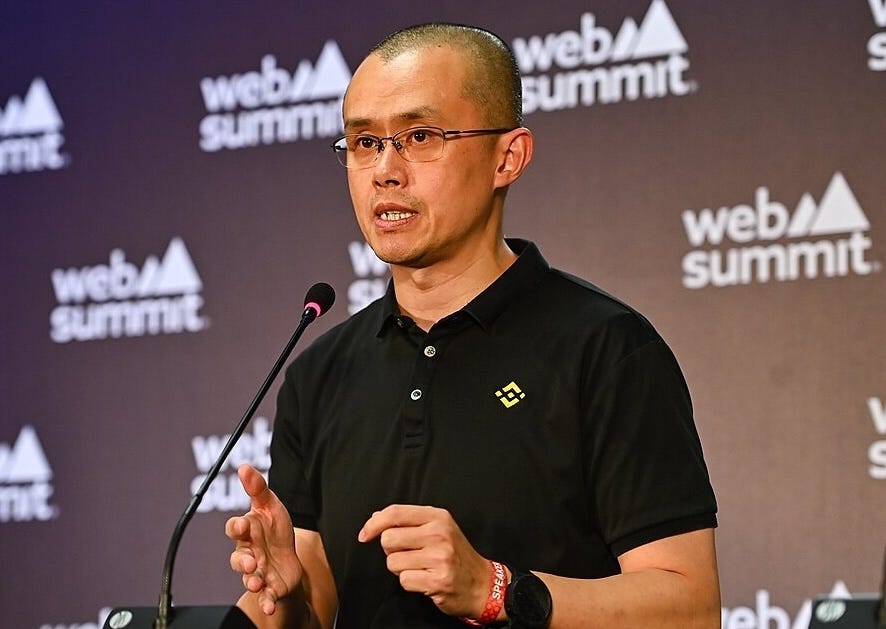
In October, Trump granted another crypto-bro pardon, this time to a billionaire who had pleaded guilty to enabling money laundering. The president’s act of clemency was bestowed on Changpeng Zhao, the founder of the cryptocurrency exchange Binance. Zhao had already served four months in prison after admitting he violated the law by not installing a compliance system at Binance, enabling terrorist organizations to move money on his platform.
But it was no simple act of forgiveness. As with so many matters involving Trump, there was a financial quid pro quo. According to The New York Times, Zhao had hired lawyers and lobbyists with ties to the Trump administration, and before the pardon, Binance helped facilitate a $2 billion purchase of stablecoins from World Liberty Financial, the crypto company founded in 2024 by Trump sons Donald Jr. and Eric along with the sons of Trump’s Middle East envoy Steve Witkoff. Shortly after his pardon, Zhao vowed to “do everything we can to help make America the Capital of Crypto.”
No remorse, no admission of guilt
Many of the convicts Trump has freed exhibit little if any remorse for their misdeeds. Ulbricht, for example, has been barnstorming across the country giving speeches, including one at a Bitcoin 2025 conference in Las Vegas last May where his fans paid $5,000 each for a seat at an “intimate” pre-speech lunch with him. “Be a part of history,” the conference’s registration page proclaimed, “as we welcome Ross back to the community that never stopped believing in him.”
Other convicts who received clemency just can’t stop committing crimes. Take Adriana Camberos, for example. In January 2021, Trump commuted the California businesswoman’s sentence for selling counterfeit bottles of an energy drink to retailers after she served about half of a 26-month prison term. She then cooked up a fraudulent scheme with her brother to sell discounted products earmarked for Mexico in the more lucrative U.S. market, which netted them tens of millions of dollars. The two were convicted last November, but Trump came to the rescue and pardoned them just last week.
Meanwhile, more than 30 of the January 6 insurrectionists Trump pardoned have been charged or sentenced for other crimes since their assault on the Capitol, including child sex trafficking and illegal firearms possession, according to a December report by Citizens for Responsibility and Ethics in Washington, a nonpartisan nonprofit organization. One pardoned rioter, Christopher Moynihan, was charged with a felony in October for allegedly threatening to kill House Minority Leader Hakeem Jeffries.
Finally, like Trevor Milton, many of the criminals who have received Trumpian clemency continue to maintain their innocence.
“I’m not trying to redeem anything,” said Todd Chrisley during an interview with ABC News last summer. “We were convicted by a jury of our peers. Were we? I didn’t see multimillionaires in that jury box. I didn’t see people who were in the film industry in that jury box. I saw people in a heavily Democratic county and a judge allowed them to paint us as this white family who has white entitlement.”
Jonathan King, Money Trail’s senior editor, is a former Center for Investigative Reporting staff member, ABC News field producer, Seattle Weekly news editor, and Pacific Northwest public radio reporter.
Money Trail is a fiscally sponsored project of the Alternative Newsweekly Foundation, a 501(c)(3) public charity, EIN 30-0100369. Donations are tax-deductible to the extent allowed by law.